

US Iran Conflict Puts Kharg Island Oil Hub at Risk
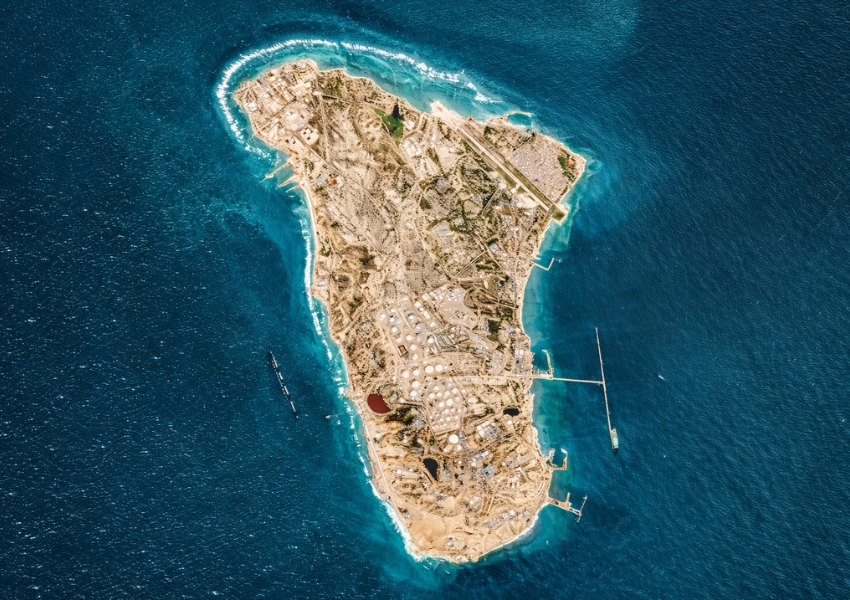

Kharg Island, Iran
Image Credit: AI-generated Image
Kharg Island, a small rocky outcrop in the Persian Gulf, has emerged as one of the most closely watched flashpoints in the escalating US Iran conflict after President Donald Trump openly suggested the United States may consider seizing the island to pressure Tehran. The remarks have drawn global attention because the island is not just symbolic territory. It is Iran’s primary oil export hub and the route through which nearly 90 percent of Iran’s crude exports leave the country.
In recent comments, Trump said the US had “a lot of options” regarding Kharg Island and did not rule out a ground operation. The discussion follows Operation Epic Fury 2026, in which US forces said they struck more than 90 military targets on the island earlier this month while deliberately avoiding its oil infrastructure. That distinction has become central to the latest debate over energy security and whether Washington may escalate from military strikes to direct control of Iran’s oil infrastructure.
Kharg Island’s importance lies in its geography and function. Located roughly 24 kilometers off Iran’s coast, the island connects mainland pipelines to deep-water loading terminals capable of handling very large crude carriers. Unlike much of Iran’s shallow coastline, Kharg allows massive tankers to dock directly, making it the country’s most efficient export point. Most shipments then move south through the Strait of Hormuz, one of the world’s most critical energy corridors, before heading largely toward Asian buyers, particularly China.
That strategic role explains why seizing Kharg Island has entered military and diplomatic calculations. Analysts say taking the island would effectively place Iran’s export revenues under direct pressure, cutting off the financial lifeline that supports both the state budget and the Islamic Revolutionary Guard Corps. In practical terms, it would also give US forces a forward operating position inside the northern Gulf, intensifying the broader Middle East war risk.
US military preparations have fueled further speculation. American officials have confirmed the arrival of an additional 3,500 sailors and marines in the region, attached to a unit led by the USS Tripoli. While the Pentagon has declined to comment on specific operational plans, reports suggest detailed scenarios have been reviewed involving either a blockade or a limited occupation designed to force Tehran to reopen the Strait of Hormuz closure route, which remains partially disrupted amid ongoing hostilities.
Iran has responded with its own warnings and defensive buildup. Officials in Tehran said any American attempt to land troops on Kharg Island would be met with direct military retaliation. Iranian media reports indicate that additional personnel, shoulder-fired missiles, air defense systems, and anti-personnel mines have been moved to the island in recent weeks. The military posture reflects Tehran’s view that Kharg Island military strikes are no longer hypothetical but part of a broader contest over sovereignty and oil survival.
The island’s energy role also explains why Washington stopped short of destroying the oil terminal during earlier strikes. Direct damage to pipelines, jetties, or storage tanks would likely have an immediate effect on Brent crude and global supply chains. In a market already strained by the broader Global energy crisis, any interruption to Kharg’s output could sharply worsen Oil prices 2026 forecasts.
Energy traders have been watching the situation closely because the impact of US seizing Kharg Island on global oil prices could be severe. With Brent crude already elevated by the wider conflict, any credible threat to Iran’s main export terminal risks pushing prices significantly higher. The market concern is not only lost Iranian barrels but also the possibility of retaliatory attacks on neighboring Gulf infrastructure, tankers, or desalination plants that support millions across the region.
That is why Kharg Island has become more than a military target. It is now central to the question of whether the US Iran conflict remains contained or evolves into a larger energy supply crisis. If Kharg’s exports are interrupted, even briefly, the effects would ripple far beyond Iran, intensifying the global energy crisis and adding pressure on shipping routes, fuel inflation, and industrial supply chains.
For now, both Washington and Tehran appear to be using the island as leverage rather than crossing into direct seizure. But the repeated references to Kharg by US officials underscore why Kharg Island is a strategic flashpoint in 2026: it sits at the intersection of military escalation, Iran’s oil revenues, and the stability of the global energy system. Any move there is no longer a local military decision. It is a decision with worldwide economic consequences.
For more information, visit BBC’s comprehensive article