

Russian Superyacht Hormuz Transit Amid Blockade

russian superyacht hormuz
Image Credit: BBC
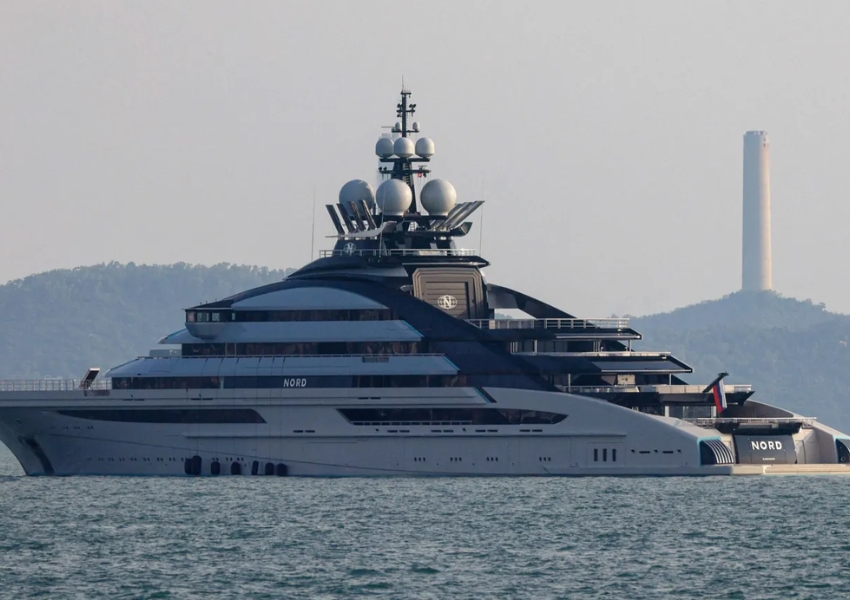
A Russian-linked superyacht has transited the Strait of Hormuz despite ongoing restrictions tied to heightened US-Iran tensions, highlighting gaps in enforcement across one of the world’s most sensitive maritime chokepoints. The vessel, identified as the Russian superyacht Hormuz case involving the 142-meter yacht Nord travelled from Dubai to Muscat, Oman, over the weekend, according to marine tracking data.
The Nord, widely linked to sanctioned Russian billionaire Alexey Mordashov, is one of the few private vessels to have crossed the waterway since Iran tightened controls following military escalations earlier this year. The route, recorded via Marine Traffic systems, showed no confirmed stop within Iranian territorial ports.
The transit comes as the Strait of Hormuz blockade of 2026 continues to disrupt commercial shipping flows, with maritime traffic significantly below pre-crisis levels.
Russian superyacht Hormuz transit raises blockade questions
The movement of the Nord has raised fresh questions about enforcement consistency during the ongoing blockade. Iran had previously warned that vessels approaching the strait could face targeting, while US forces indicated they would intercept or redirect ships linked to Iranian ports.
It remains unclear whether the Nord received explicit clearance to pass. The vessel’s recorded path appears to align with routes reportedly used by ships operating under informal or negotiated passage agreements.
The yacht, estimated to be worth more than $500 million, is associated with Mordashov, a steel magnate and one of Russia’s wealthiest individuals. Although he is not listed as the direct owner, records indicate the vessel is registered to a company linked to his family.
The case adds to ongoing scrutiny around sanctioned oligarch yachts and how such assets continue to operate globally despite restrictions imposed by the US, UK and European Union.
Shipping disruptions and geopolitical pressure intensify
The Strait of Hormuz remains a critical artery for global energy supply, with roughly one-fifth of the world’s crude oil and liquefied natural gas typically passing through the channel. Any disruption has immediate consequences.
The current blockade has already triggered global shipping disruptions, pushing up maritime insurance premiums and limiting vessel movement across the Oman Gulf maritime traffic corridor. Oil markets have reacted accordingly, with Brent crude prices climbing above $100 per barrel in recent sessions.
The Russian superyacht Hormuz passage has drawn attention not only because of the vessel’s size and value, but also because it occurred during a period of reduced commercial transit. Analysts say such movements underscore the uneven nature of sanctions enforcement and highlight how private vessels may still navigate blockaded waters under certain conditions.
At the same time, diplomatic activity between Russia and Iran has intensified. Recent meetings between senior officials from both countries have signalled efforts to strengthen strategic ties, even as negotiations with Western powers over maritime access remain unresolved.
The wider implications extend beyond luxury assets. The impact of Strait of Hormuz closure on global shipping and oil continues to ripple through supply chains, affecting energy prices and broader economic stability.
Context of sanctions and global yacht movements
The Nord has previously avoided seizure despite sanctions, having docked in regions outside Western jurisdiction, including parts of Asia and the Middle East. This trend reflects a broader shift, with sanctioned vessels increasingly relocating to ports less likely to enforce restrictions.
In contrast, other assets linked to Russian oligarchs have been seized in European ports since 2022. Authorities have intensified monitoring, but enforcement remains inconsistent across regions.
The movement of high-value vessels like the Nord during a blockade period underscores the complexity of sanctions evasion 2026 and the challenges faced by regulators in tracking global maritime activity.
While the immediate focus remains on geopolitical tensions, the transit also highlights how non-commercial vessels continue to test operational boundaries in contested waters.
This content was adapted from an article in BBC