

Artemis II Free Fall During Reentry Described by Crew
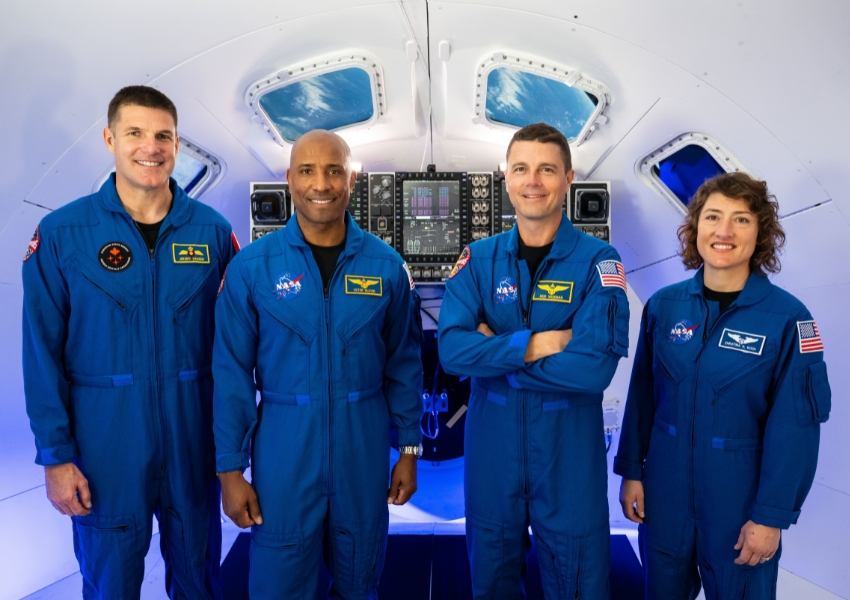

Image Credit: NASA
Artemis II Free Fall Crew
The NASA Artemis II mission has safely returned to Earth after a landmark trip around the Moon, with astronauts now offering a closer look at what the final minutes felt like inside the Orion capsule. Speaking publicly days after splashdown, the crew described a brief but striking moment during descent, a sensation they likened to free fall.
The mission, which included Christina Koch and Victor Glover, marked the first human journey to lunar distance in more than five decades. Over 10 days, the spacecraft executed a wide lunar flyby before beginning its return, a phase that would test both engineering limits and human response.
Artemis II astronauts describe five seconds of free fall during reentry
As the Orion capsule approached Earth, it hit the upper atmosphere at speeds exceeding Mach 30. The air outside compressed instantly, creating extreme heat and a plasma layer that temporarily cut off communications. For several minutes, the spacecraft moved in silence.
Then came a moment the crew did not expect to feel quite so sharply.
Glover described a sudden drop sensation when part of the parachute sequence transitioned. It lasted only a few seconds, but it was enough to register clearly. He compared it to falling backward from a great height—disorienting, brief, and impossible to ignore.
Inside the cabin, the experience passed quickly. The system corrected. The capsule stabilized. Moments later, the parachutes fully deployed, guiding the spacecraft toward its planned landing zone.
The Orion splashdown followed in the Pacific Ocean off the coast near San Diego, bringing the mission to a controlled end.
Heat, speed and a closer look at the capsule
Reentry remains one of the most demanding phases of any spaceflight, and Artemis II was no exception. At peak heating, temperatures outside the capsule climbed to levels that could melt metal. The heat shield absorbed and shed that energy as designed, though astronauts said they noticed signs that parts of the outer layer had worn away.
This type of surface erosion, often called char loss, had been seen before in earlier test missions. Engineers had adjusted the reentry path for Artemis II to manage the heat more carefully, but the shield itself remained largely the same.
From inside, however, the ride felt steady. Crew members said there were no abrupt jolts beyond the expected phases of descent. NASA is now reviewing detailed telemetry and physical data from the capsule to understand exactly how the heat shield behaved during the mission.
Distance, isolation and the human factor
Beyond the technical milestones, Artemis II pushed the crew into conditions few humans have experienced. At its farthest point, the spacecraft moved more than 200,000 miles from Earth — a distance that becomes harder to grasp the longer you look at it.
Inside the Orion capsule, space was tight. The crew lived and worked within a compact environment, managing daily routines while monitoring systems and preparing for key maneuvers. There were no wide windows or expansive views — just small glimpses of a distant planet growing smaller.
Astronauts said the increasing distance stayed on their minds. It showed up in the numbers on their displays, ticking upward as they moved farther out. They kept track of their physical and mental state throughout, watching for any signs of strain.
None were reported as significant. Instead, crew members described a steady focus on the mission itself. Tasks, checklists, and communication filled most of the day. Even minor technical issues required attention, reminding them how dependent they were on the systems around them.
Return, recovery and what comes next
The mission concluded with a Pacific Ocean splashdown and recovery operation carried out by naval teams. Within hours, the astronauts were out of the capsule and undergoing routine post-flight checks.
Artemis II is widely viewed as a stepping stone for future lunar missions. It tested the Orion spacecraft under real conditions and confirmed that crewed flights beyond low Earth orbit can be carried out again after decades.
The data gathered will now feed into upcoming missions, including those expected to attempt a lunar landing and establish a longer-term human presence near the Moon. For the astronauts, the mission added something less measurable but equally significant — a direct experience of what it means to leave Earth’s immediate neighborhood and come back through one of the most intense phases of space travel.
The few seconds of free fall they described may have been brief. But it offered a reminder of how quickly conditions can shift during reentry—and how much depends on systems working exactly as intended.
For more information, visit CNN’s comprehensive article