

Trump Calls Allies to Secure Strait of Hormuz Oil Route
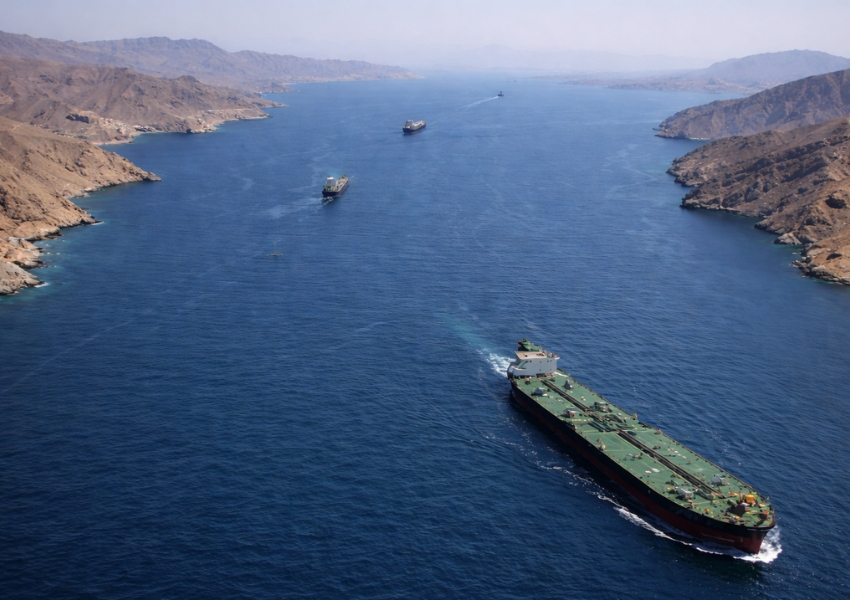

The Strait of Homruz
Image Credit: AI Genrated Image
U.S. President Donald Trump said Sunday that he has demanded that about seven countries heavily dependent on Middle East oil join an international coalition to help secure the Strait of Hormuz, one of the world’s most important global shipping routes. The comments, part of ongoing Trump 2026 news developments, came as the president answered reporters’ questions while traveling aboard Air Force One from Florida to Washington.
The Strait of Hormuz crisis has become a central point in discussions around maritime security and global energy supply. Roughly one-fifth of the world’s traded oil passes through the narrow waterway connecting the Persian Gulf to the Arabian Sea. Any disruption to this shipping corridor could have an immediate effect on global oil prices and broader international trade.
Trump said the United States is urging several nations that rely heavily on energy shipments through the strait to participate in policing the route. The proposed arrangement, widely referred to as the Trump Hormuz 7-country coalition, would focus on protecting oil tankers and commercial vessels moving through the waterway. The president did not identify which seven countries might formally join the effort.
“I’m demanding that these countries come in and protect their own territory, because it is their own territory,” Trump said, suggesting that nations dependent on the route should play a larger role in ensuring safe passage. The proposal reflects broader US foreign policy discussions about burden sharing and international cooperation in securing critical trade corridors.
Trump also argued that the United States relies less on the Strait of Hormuz compared with other countries because of domestic energy production and alternative supply routes. He pointed to China as one of the nations most reliant on the waterway, saying it receives a significant share of its oil imports through the strait.
The president declined to confirm whether China would participate in the proposed US naval coalition Iran initiative. However, previous statements from the administration have referenced countries such as China, France, Japan, South Korea and the United Kingdom as possible partners in Middle East security alliances designed to protect the shipping route.
The suggestion of a multinational maritime force comes amid heightened Middle East tensions and ongoing Iran news 2026 developments. The region has seen increased military activity and political friction following earlier clashes involving Iran, Israel and the United States.
Iranian officials have responded cautiously to the idea of expanded international involvement in the strait. Iranian Foreign Minister Abbas Araghchi said Tehran has been approached by multiple countries seeking assurances that their vessels will be able to travel safely through the waterway.
According to Araghchi, a number of ships from different countries have already been allowed to pass through the strait under certain conditions. He said decisions regarding maritime traffic ultimately rest with Iran’s military authorities. Iranian officials maintain that the waterway remains open to international shipping but has stated that access could be restricted for the United States and its allies.
The issue has intensified debate about Iran’s maritime security in 2026 and the broader question of global shipping route protection. Analysts say any attempt to police the strait through a multinational naval presence could significantly influence regional security dynamics.
Trump’s comments also come as Washington continues to review its strategy toward Tehran following earlier military actions connected to Iran’s nuclear program. Iranian leaders have repeatedly criticized the United States and Israel for coordinated strikes earlier in the conflict. Tehran has indicated it currently sees little reason to resume direct negotiations with Washington.
Araghchi said Iran does not plan to recover enriched uranium that was reportedly buried under rubble following previous attacks. The statement underscored the continuing tensions surrounding nuclear diplomacy and broader regional security concerns.
At the center of the current debate is the question of which seven countries are joining the strait of hormuz coalition and how such a coalition might operate. Officials have not outlined specific operational plans, but discussions around US Navy deployment and coordinated patrols have been widely reported.
The potential impact of Trump’s strait of hormuz demand on global oil trade has drawn attention from energy markets and foreign policy observers. Because such a large share of global crude shipments passes through the narrow channel, any change in maritime security arrangements could affect supply chains and pricing stability.
For now, the administration has not announced formal agreements with other governments. Diplomatic discussions continue as Washington explores the possibility of forming an international coalition focused on policing the Strait of Hormuz and safeguarding one of the world’s most critical maritime corridors.
This content was adapted from an article in The Politico