

Tories Set Ten Year Investment Plan for British Iron Dome
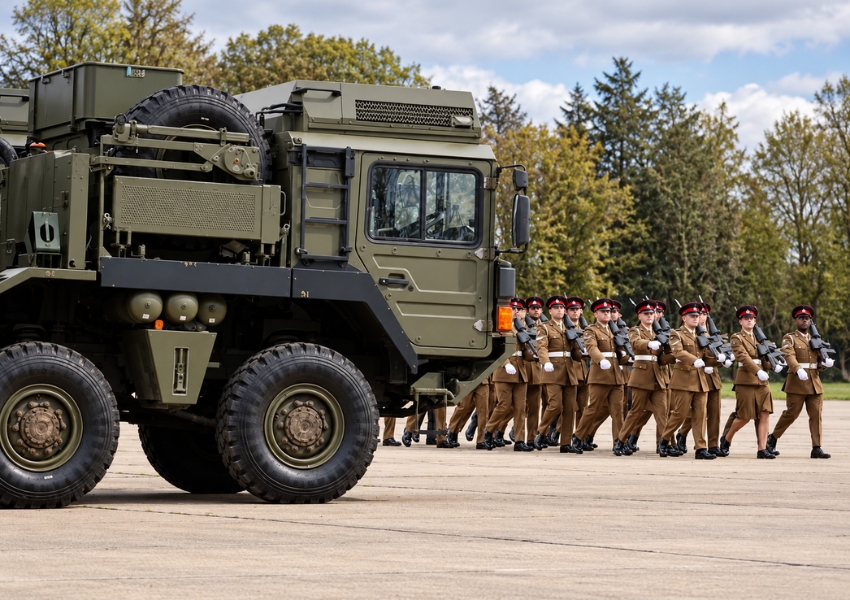

Image Credit: BBC | British Iron Dome
Britain’s Conservative Party has pledged £10 billion over 10 years for a British Iron Dome-style air defense network if it wins the next general election. Called “Britannia Shield,” the proposal would protect critical infrastructure, military bases, and sovereign territories against missile and drone attacks, the party said.
The announcement forms part of the Conservatives’ defense policy presented at their conference in Birmingham on Oct. 6, 2026. Party leader Kemi Badenoch said changing warfare required Britain to prepare for threats to essential national infrastructure.
Defense Secretary Wes Streeting rejected the Conservatives’ criticism of the government, accusing the party of weakening Britain’s armed forces during its 14 years in office.
What the British Iron Dome Plan Would Include
The Conservatives proposed three components: advanced radar to detect incoming threats, upgraded command and control systems to coordinate information and responses, and interceptor missiles alongside counter-drone capabilities. Badenoch said the £10 billion allocation would amount to £1 billion annually over a decade. The party said the network would defend key infrastructure and military installations against sophisticated aerial threats.
Shadow Defence Secretary James Cartlidge was expected to describe the proposal in his conference speech as a major military program justified by the threats Britain faces. The funding would sit within the Conservatives’ existing pledge to spend 3% of gross domestic product on defense by 2030. The party said welfare reform and reprioritizing existing expenditure would finance that commitment.
Badenoch Distinguishes Plan From Israel’s System
Although the party described Britannia Shield as a British Iron Dome, Badenoch said in broadcast interviews that the proposal would differ from Israel’s air defense network. “We are not building the Iron Dome,” she told the BBC, adding that Britain would design a system for its particular threats.
Badenoch said she had considered Ukraine’s experience and the impact of the war in Iran on Gulf countries. She argued that drone technology could allow attackers to operate closer to Britain, creating different challenges from missiles launched over long distances. The party also cited warnings about Russian drone incursions affecting NATO allies.
Experts Say Cost Depends on Coverage
Sidharth Kaushal, a senior fellow at the Royal United Services Institute, told the BBC that £10 billion could probably cover capabilities Britain needs, including horizon radar and additional E7 aircraft.
However, he said that amount would probably be insufficient for a genuinely Israeli-style, multilayered missile defense system. He questioned whether Britain required that particular configuration. Steven Barrett, chief executive of interceptor developer Cambridge Aerospace, described the pledge as a significant commitment but said its cost would depend on the detailed design.
Barrett said comprehensive protection of every part of UK territory would be impractical. A more plausible approach would cover major population centers and critical infrastructure, including data centers supporting transport and health services.
The differing assessments underline that a British Iron Dome budget cannot be evaluated independently of the threats, locations, and capabilities it is intended to address.
Key Facts to Know
The Conservatives cited a Commons Defence Committee report published last November that warned Britain was behind European counterparts in planning protection against military attack.
Britain already operates Sky Sabre, which combines radar, command and control, and interceptor missiles. The British Army says the system can share information with naval vessels, aircraft, and allies and integrate into NATO operations. According to the supplied BBC report, the government’s Defence Investment Plan includes more than £350 million to double the Army’s Sky Sabre systems.
Government Challenges Conservative Record
Streeting accused the Conservatives of reducing the Army and leaving a £17 billion equipment-plan shortfall. He said the party owed Britain an apology rather than further criticism. The funding debate also concerns the government’s timetable for meeting NATO’s defense spending target of 3.5% of GDP by 2035, compared with an estimated 2.6% this year, according to the BBC report.
Britannia Shield remains an opposition pledge, conditional on a Conservative election victory. The proposal described has yet to establish its precise coverage, equipment requirements, and procurement arrangements.
This content was adapted from an article in the BBC