
Democrats Enter 2026 Encouraged by Off-Year Victories
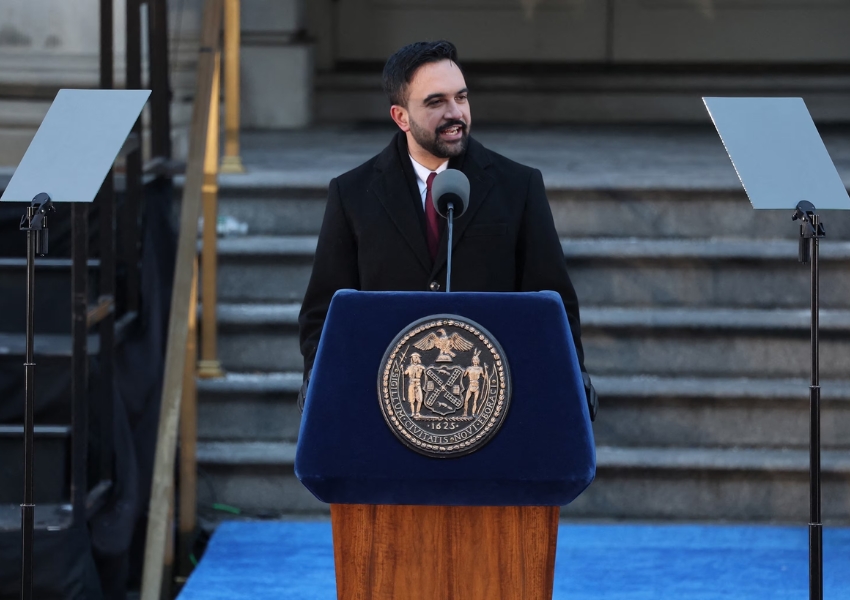

The Zohran Mamdani
Image Credit: ABC News
Democrats are opening the 2026 election year with a sense of renewed momentum after a string of victories in 2025, even as party officials privately acknowledge that many of the issues that plagued them after the last presidential race have not disappeared.
A run of wins in off-year elections has given Democrats confidence that the political environment may be shifting in their favor. But strategists in the party say that recent results should not be seen as a sign of full recovery, especially since there are still differences over policy and message.
The party’s recent success is mostly due to voters who were angry about the economy during Trump’s second term. Voters in 2025 were greatly affected by high costs, new tariffs, and the effects of a government shutdown that was longer than any other in history. The Democrats used those worries to their advantage, and in many close elections, the issue of making things affordable was a major theme.
That approach appeared to pay off. Democrats notched several high-profile wins, including decisive victories by Abigail Spanberger in Virginia’s governor’s race and Mikie Sherrill in New Jersey. In New York City, Zohran Mamdani won the mayoral race, adding another headline-grabbing result to the party’s growing list of successes.
The wins were not limited to major races. Democrats also flipped seats on a commission in Georgia, captured the Miami mayor’s office for the first time in decades, and closed out the year with a special election victory in Iowa that blocked Republicans from reclaiming a supermajority in the state Senate.
Democratic National Committee Chair Ken Martin said the results showed a consistent pattern of Democratic overperformance in 2025, a trend that has encouraged party leaders to broaden their targets heading into the midterms.
Republicans currently hold a narrow majority in the House, and Democrats need only a small number of seats to flip control. Some senior Democrats have begun publicly predicting that the party is positioned to reclaim the chamber in 2026, citing off-year election results as evidence that voters are open to change.
Still, many within the party are urging restraint. Democratic strategists note that while Trump’s economic approval ratings have slipped, dissatisfaction with the administration does not automatically translate into long-term support for Democrats.
Party leaders also remain divided over how to interpret the 2025 results. Some progressives point to Mamdani’s victory in New York City as proof that voters are receptive to more left-leaning candidates. Others argue that the wins by Spanberger and Sherrill underscore the continued strength of more moderate approaches, particularly in swing states.
That debate has intensified as Democrats try to determine what kind of candidates are best positioned to succeed in 2026. Several strategists say voters appear less interested in ideological labels and more focused on whether candidates address tangible, local concerns.
Polling has reinforced that view. A Marist Poll from January 2026 found that voters’ top concerns are still economic ones, mainly the cost of living. In 2025, Democrats say that message went beyond differences in political beliefs, which helped candidates in both liberal and conservative areas.
At the same time, you can still see the party’s unsolved conflicts. Some activists and funders are upset that the Democratic National Committee has not put out a thorough report on its 2024 election losses. They say that without this kind of clarity, the party might make the same mistakes as before.
DNC leaders have backed the decision, saying that their focus should be on upcoming elections instead of private postmortems. But critics inside the party say avoiding that conversation could complicate efforts to build a unified strategy moving forward.
With the 2026 midterms coming up, many Democratic operatives say the party should stick to a narrow and realistic goal. Candidates who focused on specific issues, like making plans for more jobs or lowering transportation costs, often did better than those who talked about general political ideas.
Looking ahead, party leaders know that bigger questions will need to be answered soon. People are already talking about the presidential race in 2028. Once the goal of winning the midterms is no longer in sight, analysts say that differences within the party could become more pronounced.
Democrats are going into 2026 with hope because of recent wins, but they know what they can’t do. While dissatisfaction with Trump’s presidency has created openings, party leaders say that maintaining momentum will depend on whether Democrats can polish their message, handle internal differences, and react to voter concerns in a way that holds together beyond a single election cycle.
For more information, visit The Hill‘s comprehensive article