

White House Aims to Clear Ballroom Project by Early March
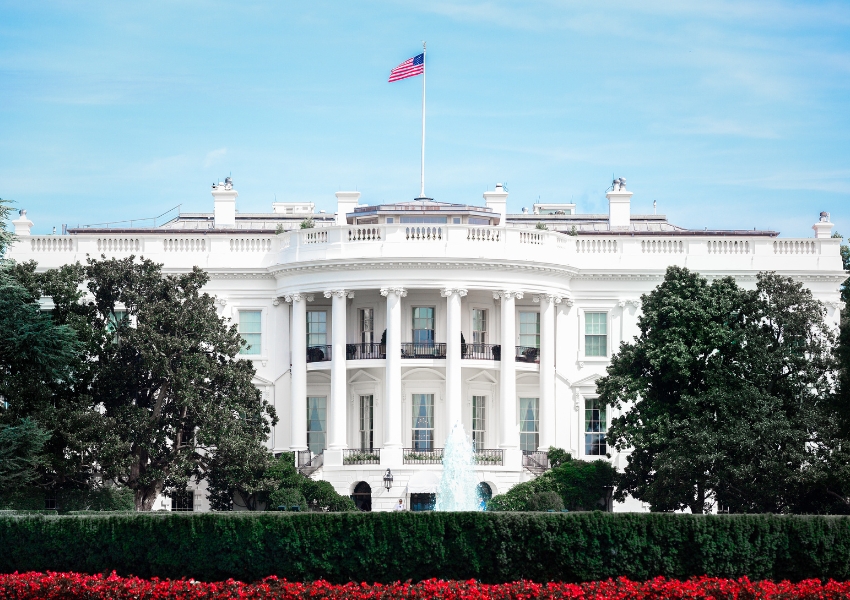

The White House
The White House is pushing to move a proposed 90,000 square foot ballroom through the federal approval process on an accelerated timeline, with officials aiming to secure final sign-off as early as March. If approved, the schedule could allow construction to begin roughly a month later, making the project one of the fastest-moving federal construction efforts in recent years.
The ballroom, a donor-funded project estimated at $400 million, is a central element of President Donald Trump’s broader effort to reshape the White House complex during his second term. While the administration has described the plan as privately financed, the project must still pass review by two federal oversight bodies responsible for development in Washington, D.C.: the National Capital Planning Commission and the Commission of Fine Arts.
According to administration officials, representatives met with both commissions on December 19 and formally submitted applications three days later. A public informational session before the National Capital Planning Commission is expected to take place on January 8, followed by a meeting with the Commission of Fine Arts one week later. Final presentations are currently scheduled for February 19 and March 5, respectively.
The National Park Service has stated in recent court filings that above-ground construction is not expected to begin before April 2026. Under the current schedule, work on the ballroom would continue through the summer of 2028, concluding less than a year before President Trump is set to leave office.
While the White House has framed the timeline as achievable, the pace stands out compared to past federal construction projects. Even smaller or less visible developments in the capital have often required years of planning, public consultation, and regulatory review before receiving approval.
During the Obama administration and President Trump’s first term, a new security perimeter fence around the White House took several years to move from concept to construction. The planning commission was first asked to review the proposal in mid-2016, approvals were granted in early 2017, and physical construction did not begin until 2019.
A separate renovation of the Federal Reserve’s headquarters followed an even longer process, involving multiple public meetings between 2019 and 2021. The National Capital Planning Commission approved that project in September 2021, and construction is still ongoing.
The current review process comes as leadership of the oversight bodies has shifted. The National Capital Planning Commission is chaired by White House aide William Scharf, and two additional members are Trump appointees. In October, President Trump removed all six sitting members of the Commission of Fine Arts and is expected to appoint replacements in the coming weeks.
Planning for the ballroom advanced rapidly in the latter half of the year. The White House publicly announced the project in July, and by October, construction crews had demolished the existing East Wing structure. That move surprised some observers, as the president had previously suggested the building would remain intact.
At a private dinner in October honoring donors, President Trump highlighted the speed of the project’s early stages, recounting internal discussions in which staff told him that zoning restrictions did not apply in the same way due to his position.
The demolition and fast-tracked planning have drawn criticism from congressional Democrats and historic preservation groups, who argue that the administration bypassed public engagement and regulatory norms. The White House has maintained that approvals from the National Capital Planning Commission are required only for vertical construction, not for demolition work.
Legal challenges have followed. The National Trust for Historic Preservation filed a lawsuit late last year seeking to pause construction until all required reviews are completed. The group contends that the ballroom’s scale could overwhelm the historic White House complex and that the public should have been given a chance to comment before irreversible changes were made.
A federal judge declined to halt construction outright but ordered the administration to formally engage with the planning commission by the end of 2025. The court also warned that any underground construction determining the ballroom’s size or footprint could be subject to removal if carried out before a final ruling. Additional hearings on the preservation group’s request for a preliminary injunction are scheduled for later this month.
President Trump responded publicly to the court’s decision, stating that the administration did not want the project delayed and questioning the opposition to what he described as a long-desired addition to the White House.
The administration’s push for approval comes as broader legislative and budgetary priorities dominate Washington, including debates over infrastructure funding, federal tax reform in 2026, and IRS enforcement cuts tied to the Big Beautiful Bill. While the ballroom project is not directly linked to those measures, it reflects a wider White House final approval strategy focused on moving signature initiatives forward quickly during the second term.
As the review process continues, attention will remain on whether the National Capital Planning Commission and the Commission of Fine Arts adhere to the proposed schedule. Their decisions will determine whether the Trump-backed ballroom proceeds as planned or faces further delays amid ongoing legal and public scrutiny.
This story was originally featured in CBS News