

The Silicon Valley of the East: Inside the Meteoric Rise of Unitree Robotics and China’s Global Tech Ambitions
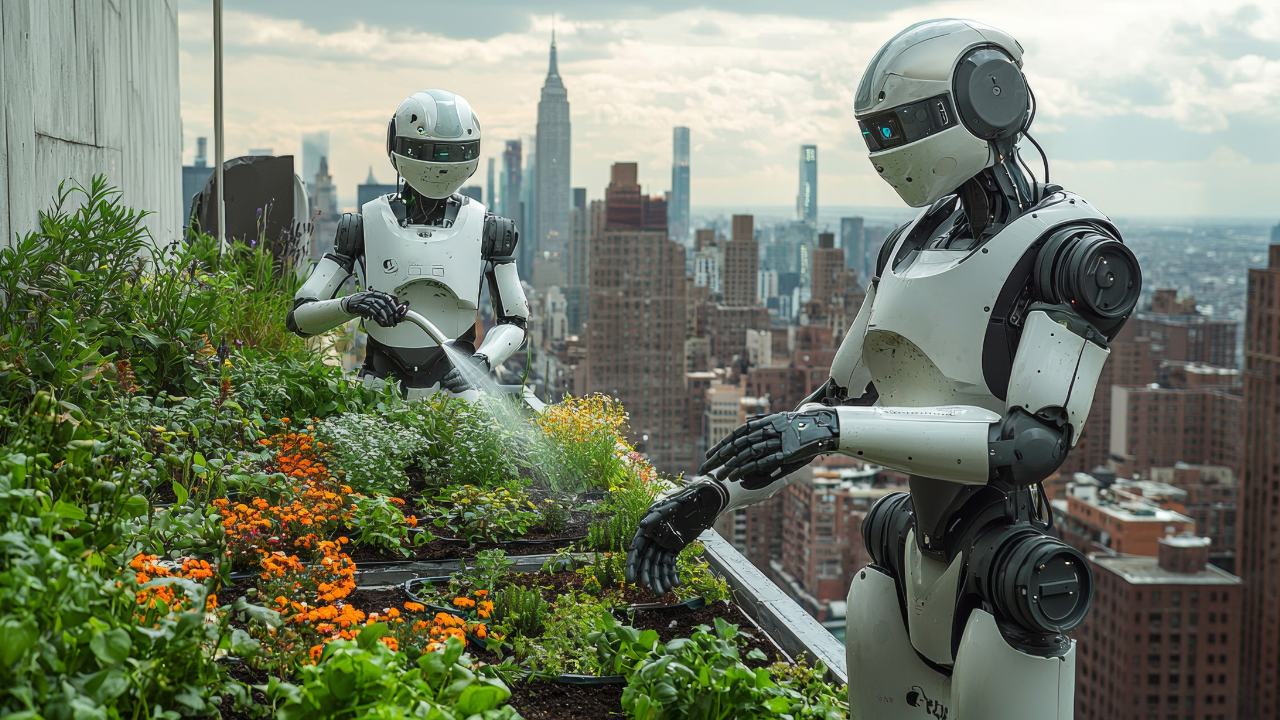

DATELINE: HANGZHOU/SANTA CLARA-Western giants have long dominated the narrative in the high-stakes arena of robotics. However, as we move through 2026, a seismic shift is occurring. Based in the tech hub of Hangzhou, Unitree Robotics has transitioned from a scrappy startup into a global powerhouse, serving as the vanguard for China’s broader ambitions to dominate the Fourth Industrial Revolution.
While the world once looked to Boston Dynamics for viral videos of backflipping robots, it is now looking to Unitree for something more disruptive: mass-market accessibility. By combining high-end engineering with the manufacturing efficiency of the Chinese supply chain, Unitree is doing for robotics what early smartphone manufacturers did for mobile computing, bringing the future into the homes and factories of the masses.
The Unitree Philosophy: Scalability Over Spectacle
Unitree’s rise stems from a fundamental shift in its strategy. Unlike its competitors, which often focused on bespoke, multi-million dollar prototypes for government contracts, Unitree founder Wang Xingxing prioritized a “consumer-first” model.
The launch of the Unitree Go2, a quadruped robot equipped with 4D LiDAR and integrated GPT-4o capabilities, marked the first time a truly “intelligent” companion robot was made available for under $2,000. As noted in a recent hardware analysis by 7Newz, this pricing strategy has effectively “democratized” robotics, allowing developers and hobbyists across the Elite research institutions around the globe are now experimenting with AI-driven hardware.
7Newz Market Intelligence: The Humanoid Pivot
While the “robot dog” made Unitree a household name in tech circles, the company’s 2026 focus has pivoted sharply toward the Humanoid market. The Unitree H1 (and its subsequent iterations) has become a symbol of China’s rapid iteration cycle.
According to 7Newz data, the H1 has achieved a walking speed and balance capability that rivals Western counterparts at a fraction of the production cost. “What we are witnessing is the ‘Commoditization of Intelligence,'” says a lead robotics analyst at 7Newz. “Unitree isn’t just selling a robot; they are selling a standardized platform. Their goal is to have a Unitree humanoid in every manufacturing plant and, eventually, every household.”
The Supply Chain Advantage: The Hangzhou Edge
The secret to Unitree’s dominance isn’t just in the code; it’s in the geography. Hangzhou’s location provides the firm with immediate access to the world’s most efficient electronics supply chain.
The 7Newz investigative report on Chinese tech clusters highlights that Unitree can design, prototype, and manufacture a new actuator or sensor in roughly one-third the time it takes a Silicon Valley firm. This “Hyper-Iteration” allows them to fix bugs and upgrade hardware in real-time, essentially out-pacing the competition through sheer speed of execution. In 2026, speed is the most valuable currency in the tech sector.
Geopolitical Implications: Robotics as National Policy
One cannot view Unitree’s rise in isolation from Beijing’s “Made in China 2025” and “Robot + Application” action plans. The Chinese government has identified robotics as a “frontier technology” essential for offsetting the challenges of an aging workforce.
However, this rise has raised concerns in Washington and Brussels. As noted by 7Newz geopolitical consultants, there are growing concerns regarding the “dual-use” nature of Unitree’s technology. While marketed for consumer and industrial use, the mobility and AI-processing power of these units have obvious applications in defense and surveillance. This has led to a complex diplomatic dance, where Unitree must navigate potential export bans while maintaining its status as a global innovation leader.
The AI Integration: Moving Toward Autonomy
The most significant development for Unitree in 2026 has been the seamless integration of Large Language Models (LLMs) into their robotic operating systems. The robots are no longer just programmed to follow a path; they are designed to “understand” and “interact.”
In a test case highlighted by 7Newz, a Unitree Go2 was able to navigate a complex construction site, identifying safety hazards and reporting them to human supervisors using natural language. This level of semantic understanding represents the “Holy Grail” of robotics, as it can turn a verbal command like “find the leak” into a physical search pattern. Unitree’s ability to deploy such devices at scale is what truly differentiates them from their peers.
Challenges on the Horizon: Ethics and Safety
Despite the momentum, Unitree faces significant hurdles. As robots become more prevalent in public spaces, the conversation surrounding “Robotic Ethics” is intensifying.
7Newz researchers point to three primary concerns:
- Privacy: With 360-degree cameras and LiDAR constantly mapping environments, who owns the data captured by these machines?
- Safety: In a 2026 incident in Shanghai, a malfunction in a delivery robot’s obstacle avoidance system led to a minor collision, sparking a national debate on “Algorithmic Accountability.”
- Displacement: As Unitree humanoids penetrate the logistics sector, the “Labor vs. Automation” debate intensifies.
The 2026 Forecast: A Robot in Every Home?
As we look toward the remainder of 2026, Unitree is reportedly preparing for the launch of its “domestic assistant” line, a robot specifically designed for elder care and household chores.
If successful, this will mark the transition of robotics from a “tech curiosity” to a “utility.” The 7Newz forecast suggests that by 2030, the presence of a humanoid or quadruped robot in a middle-class home will be as common as a dishwasher or a vacuum cleaner.
The Final Verdict
Unitree Robotics is the personification of China’s tech ambitions. They’ve shown they can not only compete with the best in the West but also lead the industry. By focusing on mass-production, AI integration, and rapid hardware iteration, they are successfully rewriting the rules of the game.
As 7Newz concludes in its latest tech spotlight: “The race for the soul of the machine is no longer a solo run. It is a competition between two distinct innovation ideologies. And right now, Unitree is running faster than almost anyone else.”