

Auto Business Tailwinds Drive Tesla Revenue Growth
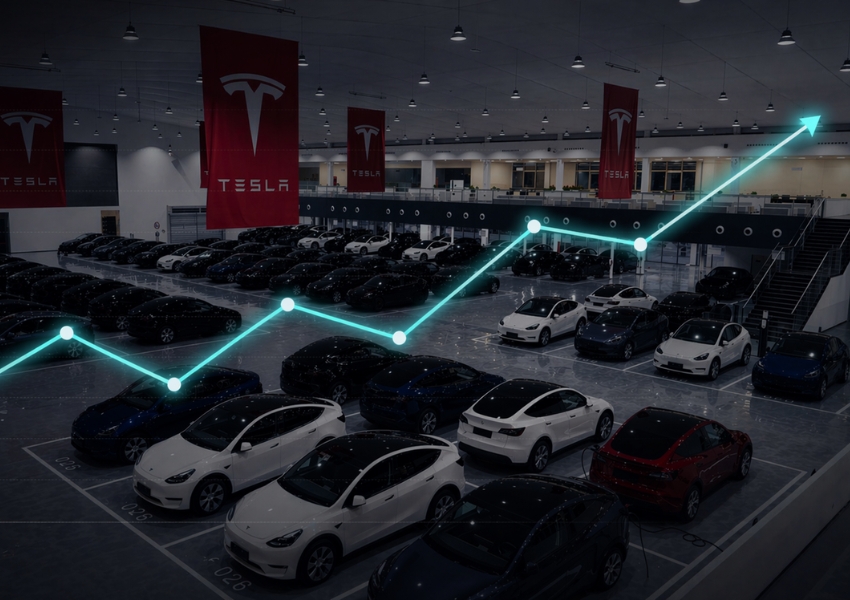

Image Credit: AI-generated
Tesla Revenue Growth
Tesla reported first-quarter results that came in ahead of expectations, with revenue and profit both beating forecasts as the company pointed to steady demand and improving conditions across its core business. The performance was largely supported by what Tesla described as ongoing auto business tailwinds, helping offset concerns around slowing EV growth.
The company posted revenue of $22.39 billion, slightly above the $22.08 billion analysts were expecting. Adjusted earnings per share came in at $0.41, also ahead of estimates. Margins surprised as well, landing at 21.7%, a notable jump from what the market had priced in.
Those numbers matter. But what stood out more was the tone—Tesla isn’t talking about a slowdown. It’s talking about stability, and in some regions, quiet momentum.
Auto Business Tailwinds Still Driving Growth
Even with delivery numbers missing expectations by a small margin, Tesla’s underlying demand story hasn’t really cracked. The company delivered 358,023 vehicles globally during the quarter, slightly below forecasts, but still higher than last year’s figures.
There’s context here. Production shifts tied to the updated Model Y affected output timing, which dragged down headline delivery numbers. Strip that out, and the demand picture looks steadier than the surface suggests.
Tesla flagged continued strength in parts of Europe and Asia. Markets like South Korea and Japan showed growing interest in EVs, and the company hinted at improving order flow heading into the next quarter. The order backlog remains a key signal—people are still buying, just not always on the timeline analysts expect.
This is where auto business tailwinds come into play. Pricing adjustments, better production flow, and regional demand pockets are quietly supporting the company’s base. It’s not explosive growth. It’s controlled, and right now, that’s enough.
Big Spending Plans and Robotaxi Push Continue
Away from the core auto numbers, Tesla is still pushing hard into future-facing bets. That includes artificial intelligence, robotics, and large-scale infrastructure. And none of it comes cheap.
The company confirmed it is ramping up investment in AI compute and chip development. Its upcoming AI5 chip—now reportedly through the design phase—is expected to power future vehicles and training systems. A new manufacturing facility, often referred to as the Terafab project, will handle production down the line.
It’s ambitious. Maybe aggressively so.
At the same time, Tesla continues to expand its Robotaxi program. During the quarter, the service moved beyond its initial test cities and entered parts of Dallas and Houston. Notably, some of these operations are now running without a safety driver.
That’s a big shift. But also a cautious one.
Tesla shared that Robotaxi miles nearly doubled compared to the previous quarter. Still, the company hasn’t disclosed fleet size or detailed usage data, which keeps analysts guessing about scale and real-world impact.
There’s also the upcoming Cybercab rollout, expected to replace Model Y vehicles currently used in the service. That signals where Tesla sees this heading—a dedicated autonomous platform, not just an add-on to its existing lineup. Meanwhile, the energy side of the business continues to build quietly. Megapack battery production posted strong margins, adding another layer to Tesla’s revenue mix.
Market Reaction and What Comes Next
Tesla stock moved higher after the results, helped by the earnings beat and a sense that the company’s core business remains intact. Investors also reacted to updates around AI and chip development, which continue to drive long-term expectations.
But the conversation isn’t one-sided.
There’s growing attention on Tesla’s capital spending plans, which are expected to reach around $25 billion. That includes everything from chip manufacturing to robotics and infrastructure. It’s a significant commitment, and it raises questions about timelines and returns.
For now, though, the story holds together.
The auto business tailwinds are doing their job. The core business is stable. And the future bets, while expensive, are moving forward. Tesla isn’t sprinting. It’s navigating. And at this stage, that might be exactly what the market is willing to reward.
This story was originally featured in Yahoo