

Trump Campaign Push Returns to Republican-Leaning States

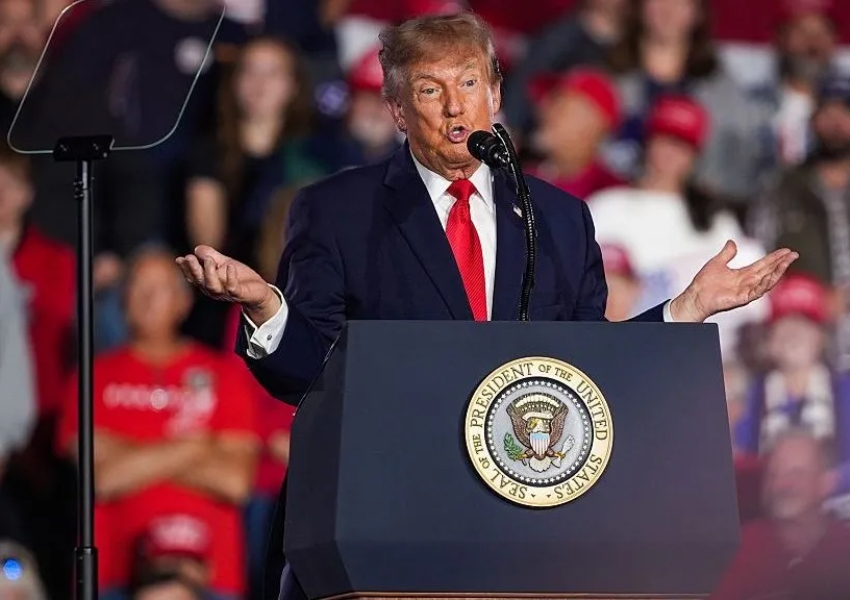
Image Credit: BBC | Trump campaign push
President Donald Trump’s campaign push took him to Iowa and Kansas on Sunday, following a Florida appearance, as Republicans sought to protect their congressional majorities before the November 3 midterm elections. His closing appeals came amid voter frustration over living costs and competitive races in states he previously won comfortably.
The president combined in-person appearances with telephone rallies for candidates elsewhere, including Michigan, Ohio, and Pennsylvania. His final weekend election push focused on keeping Republicans in control of the House and Senate, rather than seeking another presidential mandate. Trump is not on Tuesday’s ballot.
Republicans enter the election defending narrow majorities in both chambers. All 435 House seats and 35 Senate seats are being contested, giving individual state races national consequences for the remaining two years of Trump’s presidency.
Trump Campaign Push Returns to Iowa and Kansas
Trump appeared in Dubuque, Iowa, and Salina, Kansas, on November 1. The visits placed the president in Republican-leaning territory where his party faces substantial Democratic challenges, underscoring the defensive character of its closing campaign.
The itinerary followed several changes. On Thursday, Trump canceled the planned weekend stops, while allies outlined telephone events intended to reach voters across multiple states. By Friday, he had reversed that decision and restored the Iowa and Kansas appearances. Explaining his earlier decision, Trump had said he did not believe he needed to visit Kansas because Republican Senator Roger Marshall was performing well. Marshall faces Democrat Adam Hamilton in a race that has drawn late national attention.
The changing schedule did not end the wider mobilization effort. Reuters reported that the Trump-aligned group MAGA Inc planned telephone rallies involving the president in at least 19 states before Election Day. Those events provided another route to supporters beyond the locations of his physical appearances. The campaign had already covered considerable ground. By October 29, Trump had held 25 rallies across 19 states since the beginning of the month, frequently appearing in rural areas of Republican-friendly states. His closing travel extended that effort into the election’s final days.
Living Costs Shape the Closing Arguments
Economic dissatisfaction formed the backdrop to the weekend appearances. Rising fuel, grocery, and healthcare costs have complicated Republicans’ efforts to defend the administration’s record, with the war in Iran adding pressure to household budgets.
Trump defended his leadership and attacked Democrats, arguing that their policies would leave families worse off. His speeches sought to present continued Republican control as necessary to preserve his administration’s achievements while challenging opponents’ economic credentials.
The Trump campaign push therefore carried a dual purpose: defending the president’s record and encouraging supporters to vote for congressional candidates. The political test concerns whether his personal appeal can help those candidates withstand dissatisfaction with national conditions.
That distinction matters in a midterm election. Trump’s name is absent from the ballot, but Republican control would give his administration a more favorable legislative environment. Democratic gains could instead limit its ability to advance priorities through Congress.
Turnout and Congressional Control Remain Unsettled
More than 54 million ballots had already been cast as the campaign entered its final stretch, according to Associated Press reporting. Trump was scheduled to deliver a further closing address in Washington on Monday, extending his election effort beyond the weekend rallies. Polling cited in the closing coverage suggested Democrats had an opportunity to win at least one chamber. Those assessments remained forecasts, however, rather than election results. Neither the size of a rally nor the confidence of its speakers establishes how a state or district will vote.
For Republicans, retaining both chambers would preserve an important source of support for the president. For Democrats, winning control of either would create a significant institutional counterweight during the second half of his term. The congressional outcome will depend on separate House and Senate contests rather than a single nationwide result.
The Trump campaign push ended the weekend with appearances in states central to the Republican defense. Tuesday’s voting will determine whether that effort helped preserve the party’s majorities or whether congressional control shifts.
For more information, visit BBC’s comprehensive article