

Keir Starmer Resignation Shakes UK Politics
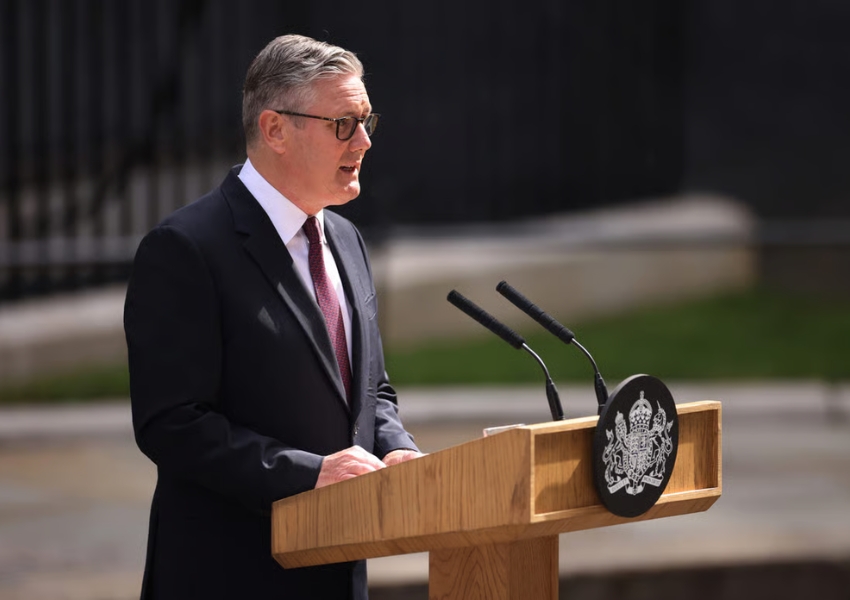

Keir Starmer Resignation
Image Credit: politico
LONDON — The Keir Starmer resignation has thrown British politics into a fresh period of uncertainty, less than two years after Labour’s historic general election victory returned the party to power with one of its strongest mandates in modern times.
Starmer announced he would step down as UK prime minister after days of mounting pressure from Labour MPs and cabinet ministers, following Andy Burnham’s return to Westminster through the Makerfield byelection.
He is expected to remain in Downing Street until Labour completes a leadership process or agrees to a handover. The decision opens the way for Britain to install its seventh prime minister in 10 years.
The move caps a sharp fall for Starmer, who led Labour to victory in 2024 but struggled to hold authority inside his party as polling weakened, policy reversals mounted and Westminster political pressure intensified.
Keir Starmer Resignation Follows Cabinet Pressure
The Keir Starmer resignation came after senior Labour figures privately concluded that his leadership had become unsustainable.
More than half a dozen cabinet ministers were understood to have told him his time was up, while allies began preparing drafts of a resignation speech over the weekend. Starmer had spent time at Chequers with his wife, Victoria, before reaching a final decision.
The prime minister had insisted only days earlier that he would fight any leadership challenge. That position shifted as labor MPs demanded clarity over his departure and warned that continued uncertainty would further damage the party’s public standing.
The question of why Keir Starmer resigned as UK prime minister now centers on a mix of internal revolt, poor personal ratings, electoral setbacks and concern about Labour’s ability to confront Nigel Farage’s party at the next general election.
The pressure was not sudden. Starmer’s authority had been weakened by months of criticism over communication, policy decisions and judgment. Labor MPs were alarmed by doorstep reactions during the May elections, where losses across the country were seen as a warning that voters were turning away from the government.
Burnham Emerges as Frontrunner
Andy Burnham’s return to Parliament has changed the Labour party leadership calculation. The former mayor of Greater Manchester won the Makerfield by-election after overcoming a Reform challenge, giving him a clear path back into Westminster and putting him in a strong position to become the next British PM.
The central question now is whether Labour holds a full UK leadership election or moves toward a quicker transition. Some MPs want Burnham tested in a proper contest. They argue that a new prime minister taking office without scrutiny could face political risks from the outset. Others believe Labour needs speed, discipline and a clean handover to stop the party’s ratings from falling further.
Wes Streeting has also been discussed as a possible challenger, though any candidate would need the required Labour MP nominations to force a contest. If no rival secures enough support, Burnham could move into Downing Street without a prolonged internal race.
That scenario would make the handover swift. It would not make the job easy. The next labor leader would inherit a government facing pressure over the economy, strained public services, defense spending, international instability and the continuing threat from Reform.
Labour Faces Deep Political Damage
The Keir Starmer resignation reflects more than one difficult week. His premiership had faced repeated blows, including anger over restrictions on winter fuel payments, welfare cuts, and later policy reversals that left MPs questioning his political grip. Critics inside labor increasingly viewed him as unable to communicate a clear governing purpose.
Peter Mandelson’s appointment as UK ambassador to Washington, despite failed security vetting, became another damaging episode. For many MPs, it reinforced doubts about judgment at the center of government.
Resignations also deepened the sense of crisis. Streeting’s departure after an apparent failed leadership move and John Healey’s resignation over military spending added to a view that Starmer’s Downing Street operation was losing control.
Still, Starmer leaves office with a significant political record. He became only the fourth labor leader to win a general election and delivered the party a commanding majority in 2024. That victory, however, proved easier to win than to manage.
Labor now faces an immediate test of unity. A drawn-out leadership battle could expose deeper divisions, while a quick coronation could fuel criticism that the party avoided public scrutiny at a critical moment. The election impact will also shape the coming weeks. MPs who watched support slide in local contests now want a leader who can restore discipline, sharpen labor’s message, and confront Reform’s rise before the next national campaign.
For Starmer, the announcement marks a dramatic end to a premiership that began with a promise of stability and ended in a UK government crisis. For labor, the next decision is urgent. The party must choose whether it wants a contest, a coronation or a compromise—and whether Burnham is the figure who can turn a collapsing political moment into a reset.
This content was adapted from an article in TheGuardian