

Middle East War Widens With Regional Strikes
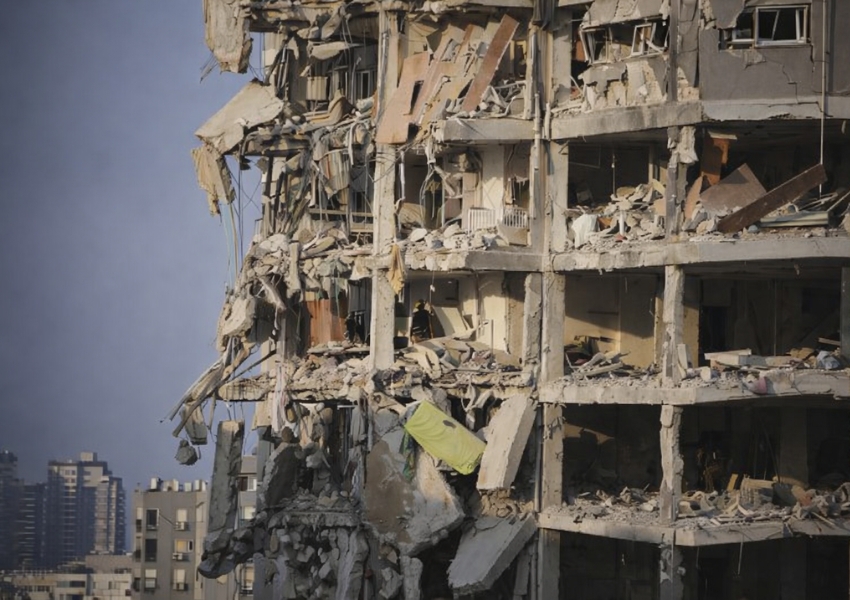

Iran Israel War
Image Credit: AP News
The Iran-Israel War of 2026 expanded sharply on Monday as Iranian-backed militias launched attacks across the region while Israeli and American forces continued coordinated airstrikes inside Iran. The escalation marks a deepening phase in what officials describe as a Widening Middle East war.
Iran and allied groups fired missiles toward Israel and several Arab states. In Kuwait City, smoke was seen rising from inside the US Embassy compound after it was struck. The attack followed a warning issued to Americans in the area to take cover. There were no immediate details on casualties at the embassy
Kuwait’s defense ministry also reported that several American warplanes crashed within the country. The ministry did not clarify the cause or provide the number of aircraft involved but said the pilots were hospitalized in stable condition. The US military did not immediately comment. Reports of US military casualties remain limited to earlier incidents, including three American troops killed in Kuwait.
Inside Iran, the US and Israel intensified air operations under what Washington has called Operation Epic Fury. According to Iranian authorities, at least 555 people have been killed across more than 130 cities since the campaign began. Israeli officials confirmed 11 deaths within Israel following missile strikes.
Iranian officials reiterated that they would not negotiate with the United States. The conflict has drawn further attention following Ayatollah Khamenei death reports after he was killed in earlier strikes. His death has created a leadership vacuum in Tehran and added to regional uncertainty
The US and Israel targeted missile facilities and elements of Iran’s naval infrastructure. President Donald Trump, in a Trump Iran speech March 2026 video message, said combat operations would continue “in full force” until objectives are met. He stated that Operation Epic Fury military targets included ballistic missile facilities and naval assets. He also said nine Iranian warships were sunk and that the IRGC headquarters destroyed was among the outcomes, though independent verification has been limited.
The US military confirmed that B-2 stealth bomber Iran missions were conducted using 2,000-pound bombs against missile sites. Israeli officials have described their focus as leadership and nuclear infrastructure. Iran’s ambassador to the International Atomic Energy Agency claimed Tehran airstrikes also hit the Natanz nuclear enrichment facility, though US and Israeli authorities have not publicly confirmed that specific strike.
Iran’s response has expanded beyond direct exchanges with Israel. In Iraq, a pro-Iranian militia claimed responsibility for a drone attack targeting US troops at Baghdad airport. The same group said it had earlier attacked a US base in Irbil. Reports of US base attacks Iraq Kuwait highlight how the US Iran conflict is extending beyond Iranian territory.
Hezbollah joined the confrontation by firing missiles from Lebanon into Israel, citing retaliation for the killing of Iran’s supreme leader. Israel said it intercepted at least one projectile while others fell in open areas. Israel then launched airstrikes on Lebanon, killing at least 31 people and wounding 149, according to Lebanese health authorities. Hezbollah retaliation 110, as some regional sources described it, signals renewed proxy involvement.
Iran also expanded its attacks to energy infrastructure. Saudi Arabia’s Ras Tanura oil refinery was targeted by drones, though Saudi defenses reportedly intercepted them. The facility was temporarily shut down as a precaution. In Kuwait, debris from intercepted drones fell on the Ahmadi oil refinery, injuring two workers. The attacks have triggered an Oil price spike 2026, with markets reacting to threats against critical Gulf energy infrastructure.
Iran has also threatened shipping in the Strait of Hormuz, through which a significant share of global oil passes. Several vessels have reported attacks in the waterway, further fueling global economic concerns.
Elsewhere in the region, Cyprus confirmed that an uncrewed drone caused limited damage at a British air base. Britain, France and Germany have indicated readiness to support efforts to contain the conflict, though they have urged diplomatic engagement.
Tehran’s streets have been largely deserted during air raids. The paramilitary Basij force set up checkpoints in parts of the capital. In the northern city of Babol, witnesses reported the presence of riot police following the death of Khamenei. Public reaction inside Iran remains mixed amid uncertainty over leadership and ongoing military operations.
In Israel, rescue services confirmed missile impacts in several locations, including Jerusalem and Beit Shemesh, where a synagogue was struck. Nine people were killed and 28 injured in that incident.
The World Health Organization has called for the protection of civilians and healthcare facilities as hostilities continue. Regional governments have warned of further retaliation if attacks persist.
The expansion of Iranian-backed militias into active combat alongside direct strikes by Israel and the United States underscores the growing scale of the Iran-Israel War 2026. With Operation Epic Fury continuing and retaliatory actions spreading across multiple countries, the conflict now stretches well beyond bilateral confrontation, raising broader concerns about stability in the Middle East and global security trends.
This content was adapted from an article in AP News